Monday, July 11, 2011

The Keel Assembly

              
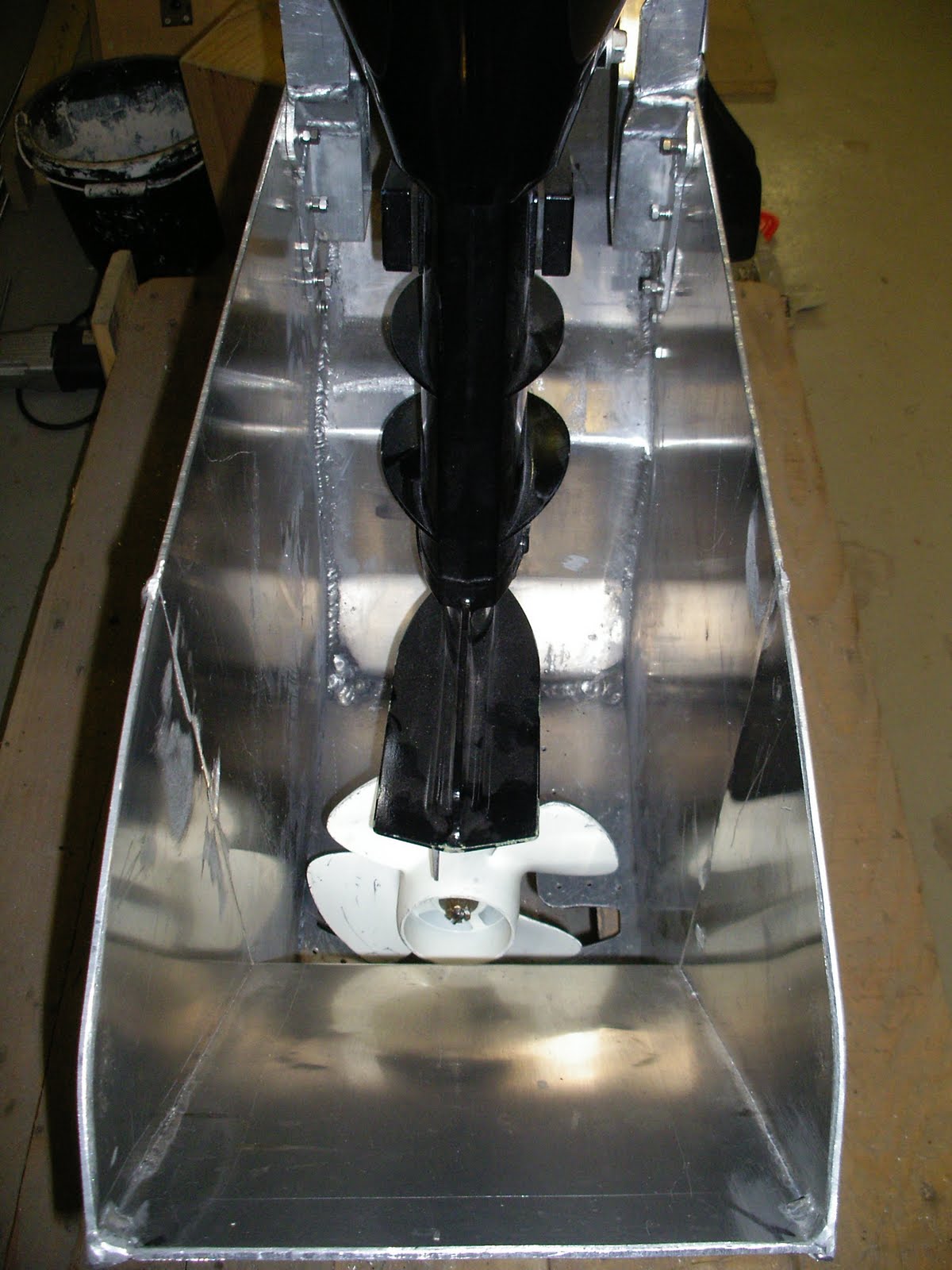
                The general profile of the infra- structure of the keel and its housing in the boat is shown


The shell and one side of the two tubular locators to accommodate the lead weights that will be locked in.


The thin plate that spans the two tubes is to be riveted to the bottom of the boat and just above the flat spacer on the right will be spreaders inside the boat to distribute stresses from the keel evenly.

Tuesday, May 31, 2011

Detachable and Adjustable Keel Design for 'Paper Thin' Hulls.

The boat as may be seen from the pictures is being built in an arch rented from London Transport and the rumble of tube trains goes on over-head. The arch fronts on to a narrow alley way into which there is access through a large shuttered door.
Exiting and handling the weight of the craft when it is finished onto a low loader or trailer will be adequate but tight provided its keel is not attached.
It is the design of and the making of that keel that now poses some difficulties
- secure and watertight attachment to a ‘paper’ thin bottom
- a frame onto which a mechanism for adjustable weights in the bulb is provided
- and a general profile that embraces the reversed tear drop concept.
The hull is 2mm thick marine grade aluminium, not the heftiest to take the weight and twisting moments of 300 kg keel.
The weight will be taken by spreading the load on 10mm plates on the boat’s bottom and the twisting moment by projecting the keel well into the centre of the hull and laying off stresses there to the hull sides by means of bracketing.

Monday, March 21, 2011

Novel Additions to Rudder Steerage.


Plan view down the rudder stock showing handle which actuates attitude of the trim 'tab'.

View to show the hollow taper section of the rudder blade.


Detail of the trim tabs and a view of the ballancing 'box' from which they trail. The box section again
adding buoyancy to the whole.

The back of the boat approaches in section if not exactly in profile a likeness to a fish tail and of course with little inherent buoyancy. To solve this in some small degree I have made the bulk of the rudder blade hollow section and added horizontal trim blades to adjust the lengthwise attitude of the boat to the waterline whilst the boat is moving. It can be seen that in side elevation the boat’s adjustment in this matter will a point of rotation well forward where there is maximum flotation effect.
The adjustment of the trim blades shown here is actuated by a tubular shaft through the rudder post and on a sliding screw and handle mounting on top of the rudder post and easily accessible by the helmsman as needed.

Wednesday, January 19, 2011

Davis Wing

The use of the Davis wing shape and its subsequent limitations may turn out to be similarly applied to the tear drop shape boat in that the pressure head generated by the nose section as speeds increase cannot potentiate its energy on the tail section.

Detail of gudgeons on the hull


Two of four gudgeons demonstrating the excellent purchase on the hull, an area of detail where strength is important

Sunday, January 16, 2011

Tear Drop Concept

In previous postings I have used tear drop freely and perhaps carelessly considering that there is a good deal of contention or confusion about tear drops and rain drops as contenders for the ideal streamlined shape consider the following link.The deformation of the rain drop in its gravity driven excursion rather puts it out of the running – it would seem reasonable that it is indeed ideal for the rain drop, one fluid volume finding its way through another. Tear drop seems to be the accepted shape of a tear or drop just before its downward departure (from the face) – essentially elongate, round nosed but quickly tapering to its tail.
Patently a whole family of different tear drop shapes can be, probably has been, generated using a range of liquids with different viscosities, surface tensions and densities. From such pictorial data an integrating algorithm might give some idea what tear drop shape is best with increasing 'rigidity' in the media'. ( we don't want our form to collapse).